
SHORT ANSWER
Whether an AI-assisted video needs disclosure cannot be decided by the presence or absence of a tool watermark. Teams should document whether the work is fully generated, substantially altered, localized, or lightly edited, then review the current disclosure fields on TikTok, YouTube, Instagram, and Facebook while separately checking rights to people, voices, music, and source material.
When should AI-generated video be disclosed?
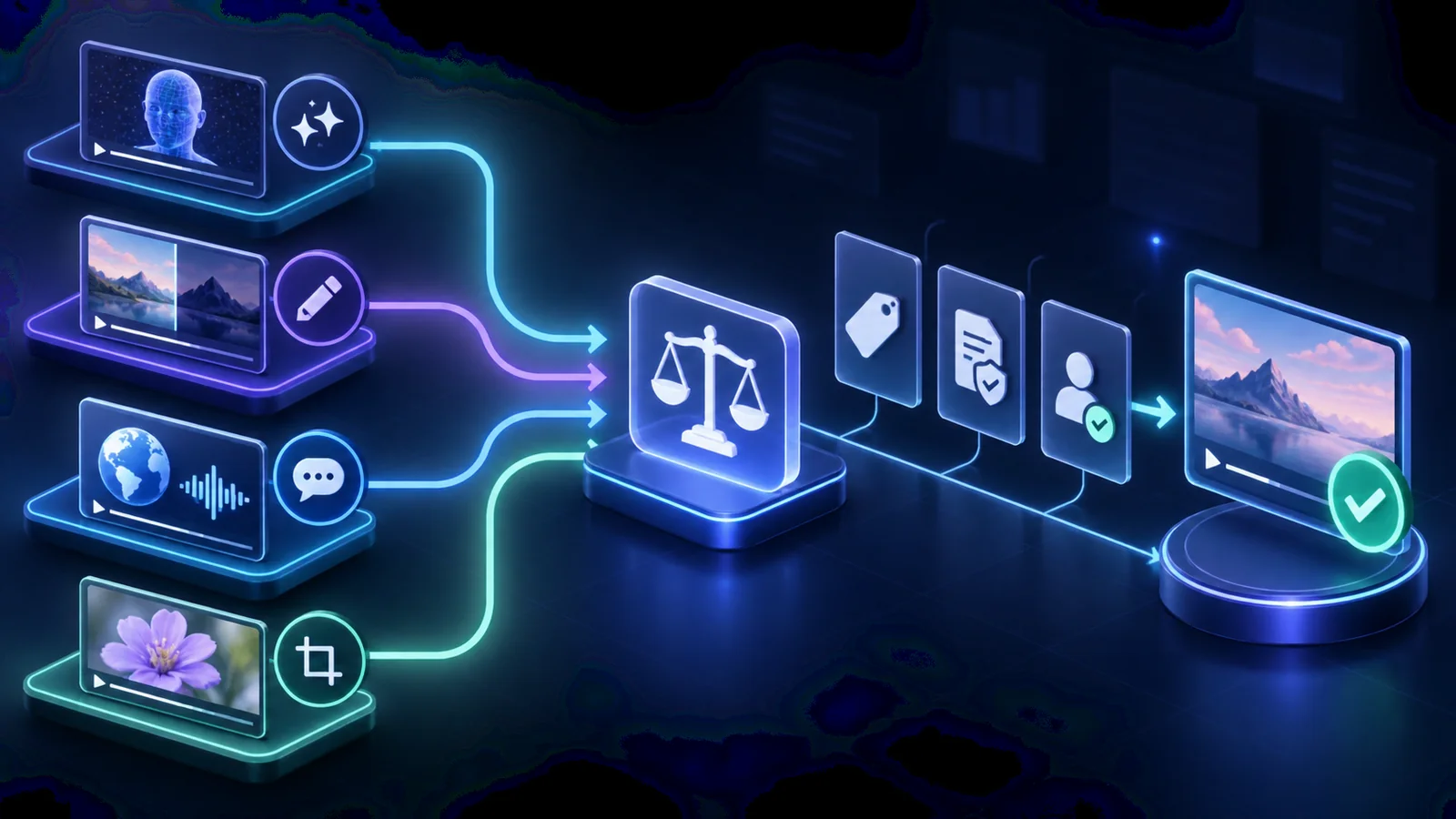
Disclosure deserves close review when AI-generated or altered material appears realistic and could change how viewers understand a person, event, or setting. Fully synthetic realistic people, footage that makes a real person appear to say something they did not say, altered records of real events, and realistic scenes that never occurred are common high-priority cases. Minor production assistance is not always treated like fully generated video. Basic color correction, sharpening, noise reduction, cropping, caption generation, or restoration that does not change factual meaning can fall into a different category. The current definition used by the destination platform should decide the final treatment. A useful starting point is to classify AI use as fully generated, substantially altered, localized, or lightly edited. Fully generated and substantially altered work should receive the closest disclosure review. Localization requires a check for changed meaning or representation. Light edits should be compared with each platform's current examples of production assistance or exempt treatment. When several techniques are present, review the most consequential one first.
Why no tool watermark can still require disclosure
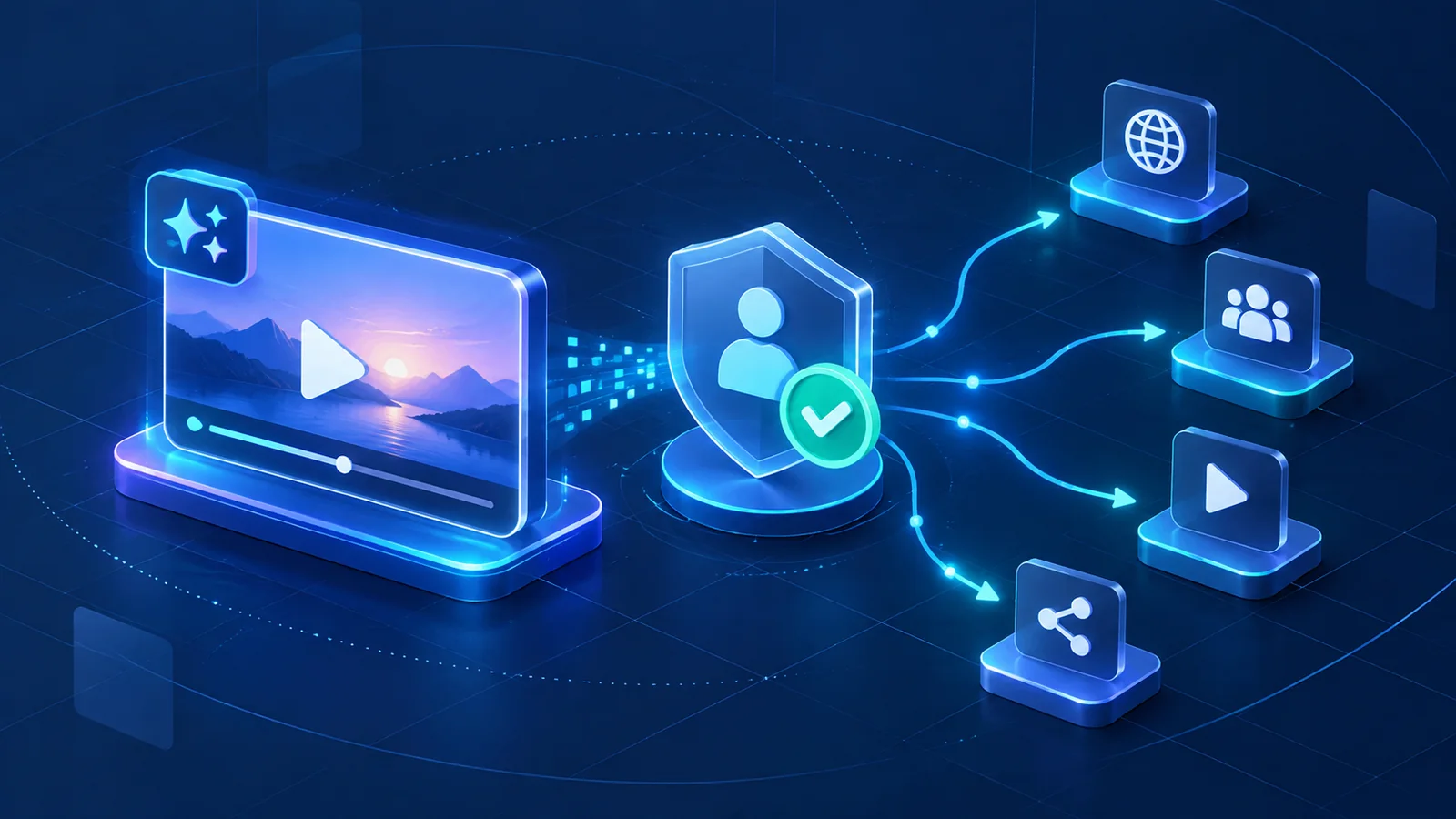
A tool watermark and a platform disclosure answer different questions. A watermark identifies whether a production tool has placed its brand on the finished asset. A platform disclosure tells viewers whether the content was generated or substantially altered with AI. A Smart BIAI export without a product watermark can still require an AI-content disclosure on the destination platform. The reverse is also true. A visible production mark does not necessarily complete the platform's required disclosure. The publisher still needs to inspect the AI-content fields available in the upload interface or official API and choose the setting that matches the work. Keep a short AI-use note with every video. Record the generation method, extent of alteration, people or voices involved, source materials, the production team's assessment, and any item that the publisher must confirm. This gives the publisher evidence beyond the appearance of the final file.
How TikTok and YouTube approach the decision differently
TikTok's Content Posting API includes AI-generated-content settings for video and photo publishing. TikTok also requires publishing tools to show the destination account, available privacy choices, and a preview before the user gives explicit consent to publish. YouTube asks creators to disclose realistic content that was meaningfully generated or altered. Its public examples include making a real person appear to say something they did not say, altering footage of a real event or place, and generating a realistic scene that did not occur. YouTube also describes some production assistance that does not normally require disclosure, including basic color adjustment, restoration, caption generation, and certain editing support. Both approaches focus on transparency, but their field names, examples, and submission paths differ. An enterprise should not store one universal AI yes-or-no answer and push it unchanged to every platform. Store the production facts first, then map those facts to the fields currently offered by each destination.
How to review Instagram and Facebook
Meta continues to develop transparency and labeling for AI-generated material on Facebook and Instagram. Before publishing, review the actual account, content type, publishing surface, and AI-information options that are available, together with Meta's current public guidance. Smart BIAI currently supports AI-content disclosure configuration in video-publishing workflows for TikTok, YouTube, Instagram, and Facebook. Support means that the workflow can carry the relevant setting; it does not mean the four platforms use identical definitions, fields, or labels. Available Instagram and Facebook options still depend on the authorized account, content type, and current publishing interface.
What production and publishing teams should each confirm
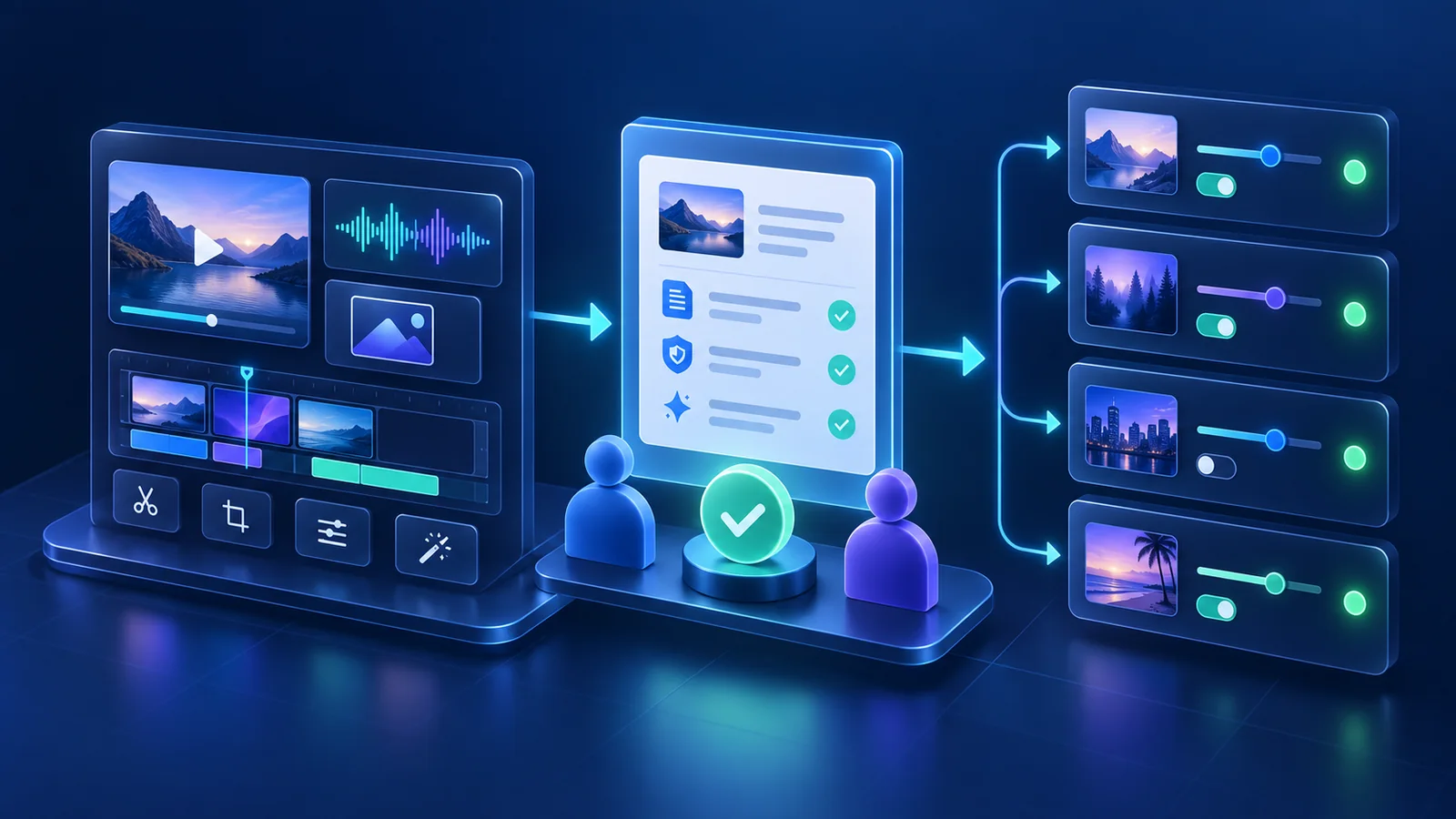
The production team knows how the content was created. The publishing team knows where and under which account it will appear. A reliable disclosure decision needs both. Production should identify source and generated assets, explain which visuals, voices, people, or text were generated or altered, note whether an edit changed a person's expression or a factual claim, and confirm the intended use of people, voices, trademarks, music, and third-party material. Publishing should confirm the destination platform and account, inspect the current AI-content field, match the selected disclosure to the production record, and separately review commercial-content declarations, visibility, comments, the final video, captions, audio, copy, and scheduled time. Production records do not replace publishing confirmation, and publishers should not be forced to infer the production process from the finished file.
Disclosure does not replace content rights
An AI-content disclosure explains how a work was made or changed. It does not grant rights to a person's likeness or voice, music, trademarks, product photography, or other third-party material. Even a correctly disclosed AI video still requires a rights check for commercial use, the destination platform and market, the accuracy of product claims, and the presence of third-party brands. Advertising, consumer-protection, and industry-specific requirements may also need separate review. Treat “Does this content require AI disclosure?” and “Do we have the right to use every element?” as two separate checks.
How Smart BIAI connects production records with publishing confirmation
Smart BIAI AI Video Creation supports generation, translation, remixing, and brand-oriented batch processing. Exports do not add a Smart BIAI product watermark. That leaves room for the customer's own brand presentation but does not change the publisher's responsibility for AI disclosure and content rights. When content moves into social publishing, Smart BIAI supports AI-content disclosure settings for video workflows on TikTok, YouTube, Instagram, and Facebook. An authorized operator should still confirm the destination account, final video, copy, publishing time, AI disclosure, and other destination-specific fields. These capabilities connect production information and publishing action in one workflow. They do not replace platform review or infer one platform's answer from another platform's rules.
Seven checks before publishing AI-assisted video
1. Identify the source of the video, images, script, music, voices, and people shown. 2. Record whether the work is fully generated, substantially altered, localized, or lightly edited. 3. Check whether it depicts a real person, place, or event in a way that did not actually occur. 4. Confirm rights to people, voices, music, trademarks, and third-party assets for the intended use. 5. Review AI disclosure and commercial-content declarations separately. 6. Use the current fields on each destination instead of copying one platform's answer to another. 7. Complete a human preview of the account, final video, captions, audio, copy, visibility, and publishing time.
Questions enterprise teams ask
Does a product-demo video need AI disclosure?
It depends on how the video was made and how the destination platform defines disclosable content. A realistic synthetic person, scene, or event, or a substantial alteration that could change viewer understanding, deserves a close review. “Product demo” is a purpose, not a content classification.
Do AI-generated captions require disclosure for the whole video?
YouTube lists caption generation among forms of production assistance that do not normally require disclosure. Other platforms and individual content may differ. If captions change what a person says or alter a product fact, the content needs correction and a fresh assessment.
What if I use my own cloned voice for localization?
Confirm the voice authorization, whether the localization changes the original meaning, and the destination platform's current treatment of generated or altered audio. YouTube lists cloning one's own voice for voiceovers or dubs as an example that does not normally require disclosure, but that example should not be assumed to apply everywhere.
Does an AI label reduce distribution?
Do not assume it does. YouTube currently states that disclosure itself does not limit audience or monetization eligibility. Recommendation and review systems on other platforms should be checked independently. The field should match the content facts regardless of presumed distribution effects.
Does disclosure allow the use of a celebrity likeness or third-party voice?
No. Explaining how content was generated does not grant rights to a likeness, voice, or other asset.
Does Smart BIAI automatically decide whether disclosure is required?
Smart BIAI provides AI-content disclosure settings in the publishing workflow. The team selects them based on the production facts and the destination platform's current requirements.
Can one approval cover the same video on four platforms?
The production record can be shared, but the fields, examples, and presentation differ across platforms. Keep one production note and complete a destination-specific confirmation for TikTok, YouTube, Instagram, and Facebook.