
PROJECT OVERVIEW
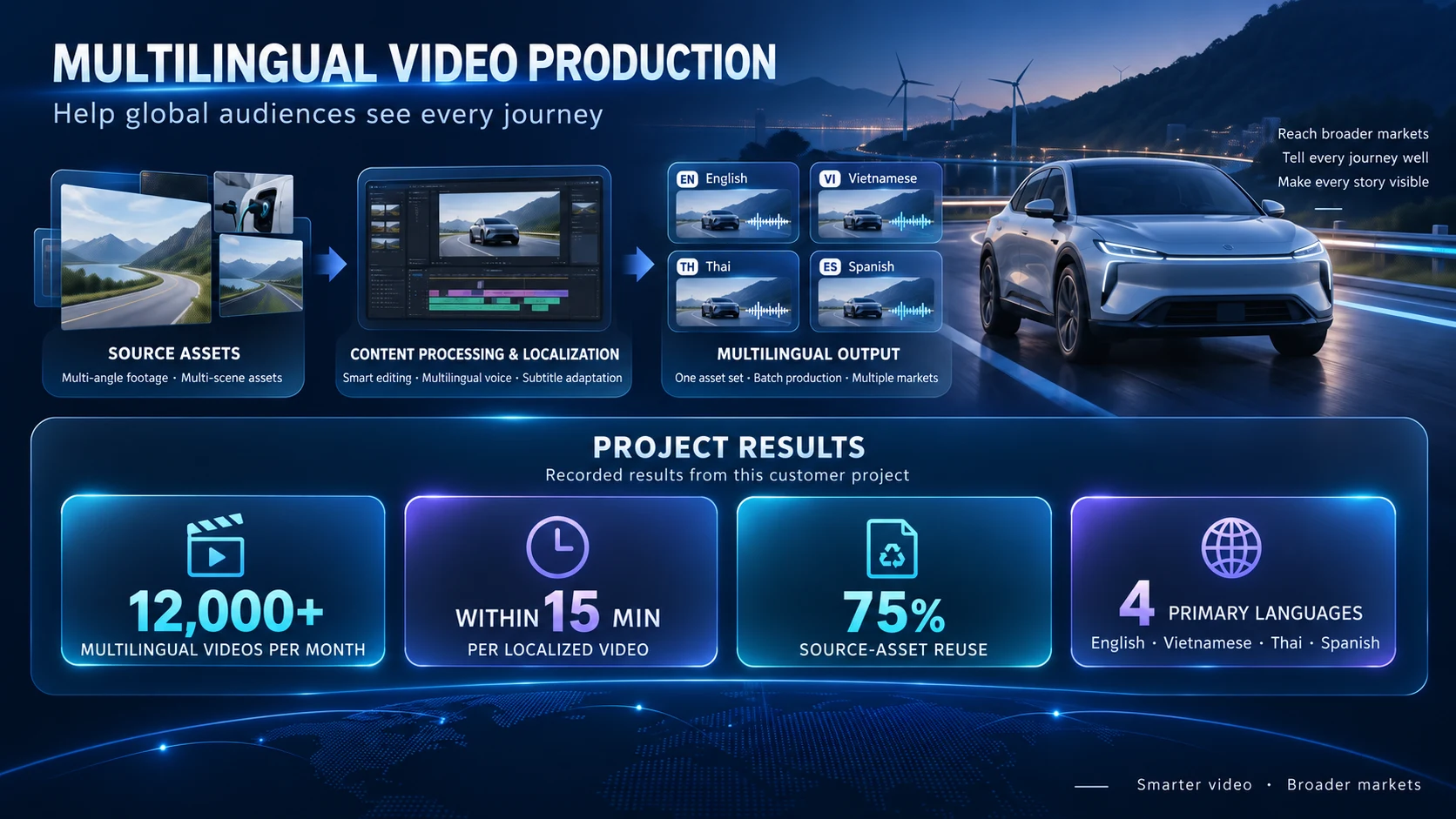
An anonymized new-energy vehicle company used Smart BIAI enterprise SaaS to connect vehicle assets, AI creative production, template-based batch generation, multilingual localization, and video task management in one workflow. Project operating records show an average of more than 12,000 multilingual short videos per month, primarily in English, Vietnamese, Thai, and Spanish. Localizing a single video was reduced from 4–6 hours to within 15 minutes, while source-asset reuse reached 75%.
How to interpret the project results
These figures describe multilingual video production in this new-energy vehicle project. Interpret volume, production time and asset reuse within their respective task conditions.
| Metric | Project result | Scope |
|---|---|---|
| Average monthly multilingual video generation | 12,000+ videos | Recorded multilingual short-video generation; actual published volume follows publishing records. |
| Production time per localized video | 4–6 hours → within 15 minutes | Before-and-after comparison for one localized video in this project; duration, language and task settings affect actual time. |
| Source promotional asset reuse | 75% | Reuse of existing promotional assets in this project; new vehicle models, scenes or local presentation may require additional filming. |
Why global automotive content becomes a production bottleneck
Vehicle showcases, feature explainers, test drives, and brand content need language, messaging, and presentation suited to each market. When assets are spread across headquarters and regional teams, the same footage is repeatedly translated, voiced, subtitled, and edited, making it difficult for production cycles to keep pace with global social channels.
How the team organized vehicle assets and content structures
The team first organized images, footage, and copy by vehicle model, market, content purpose, and usage rights. Common formats such as product showcases, feature explainers, test-drive footage, and brand stories were turned into reusable structures, so each new language or variant could begin from approved assets and templates instead of rebuilding the project.
How AI creative production extended source assets
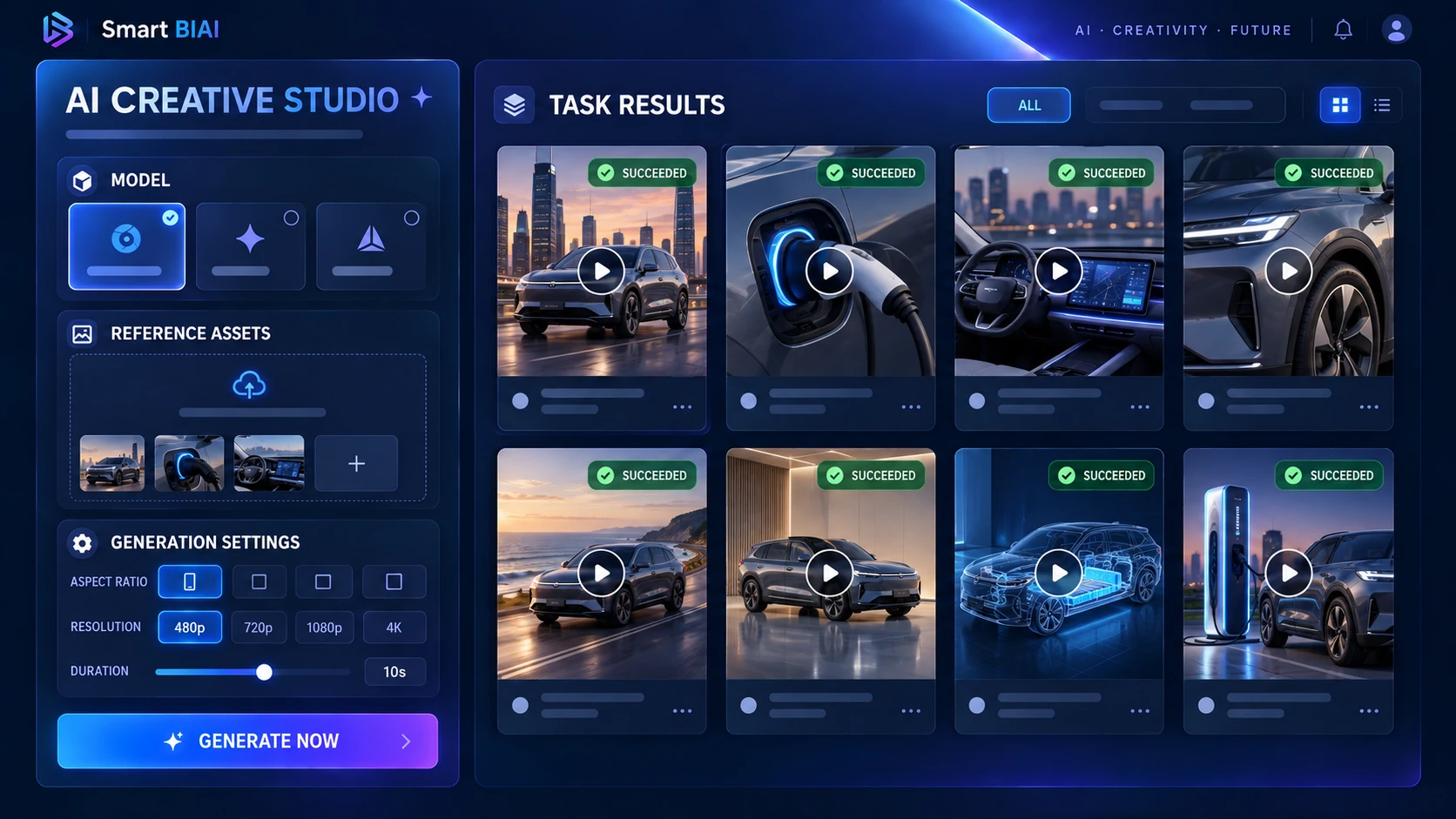
Operators could begin with images, source footage, or vehicle information, then choose the model, aspect ratio, resolution, duration, and reference mode to generate variants for additional scenes, feature communication, or creative directions. Results entered a task list for team review and selection before moving to later production steps.
How template-based generation maintained consistency
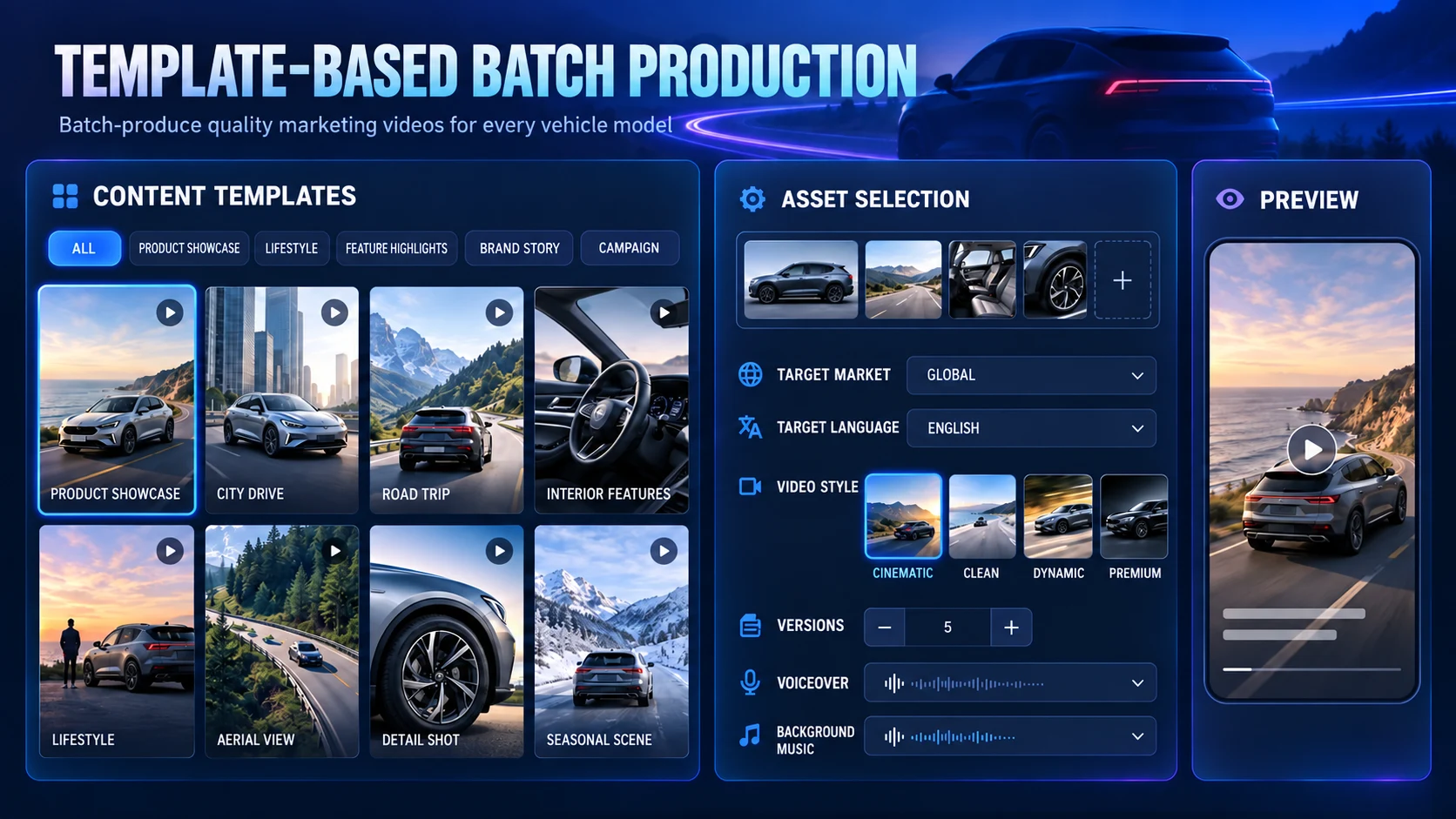
The team combined reusable content structures with vehicle assets, target markets, languages, voiceover, and music settings to produce multiple variants from one template. Templates did not replace creative judgment; they reduced repetitive setup so the team could spend more time on asset selection, factual checks, and final-video review.
How multilingual localization fit into one workflow
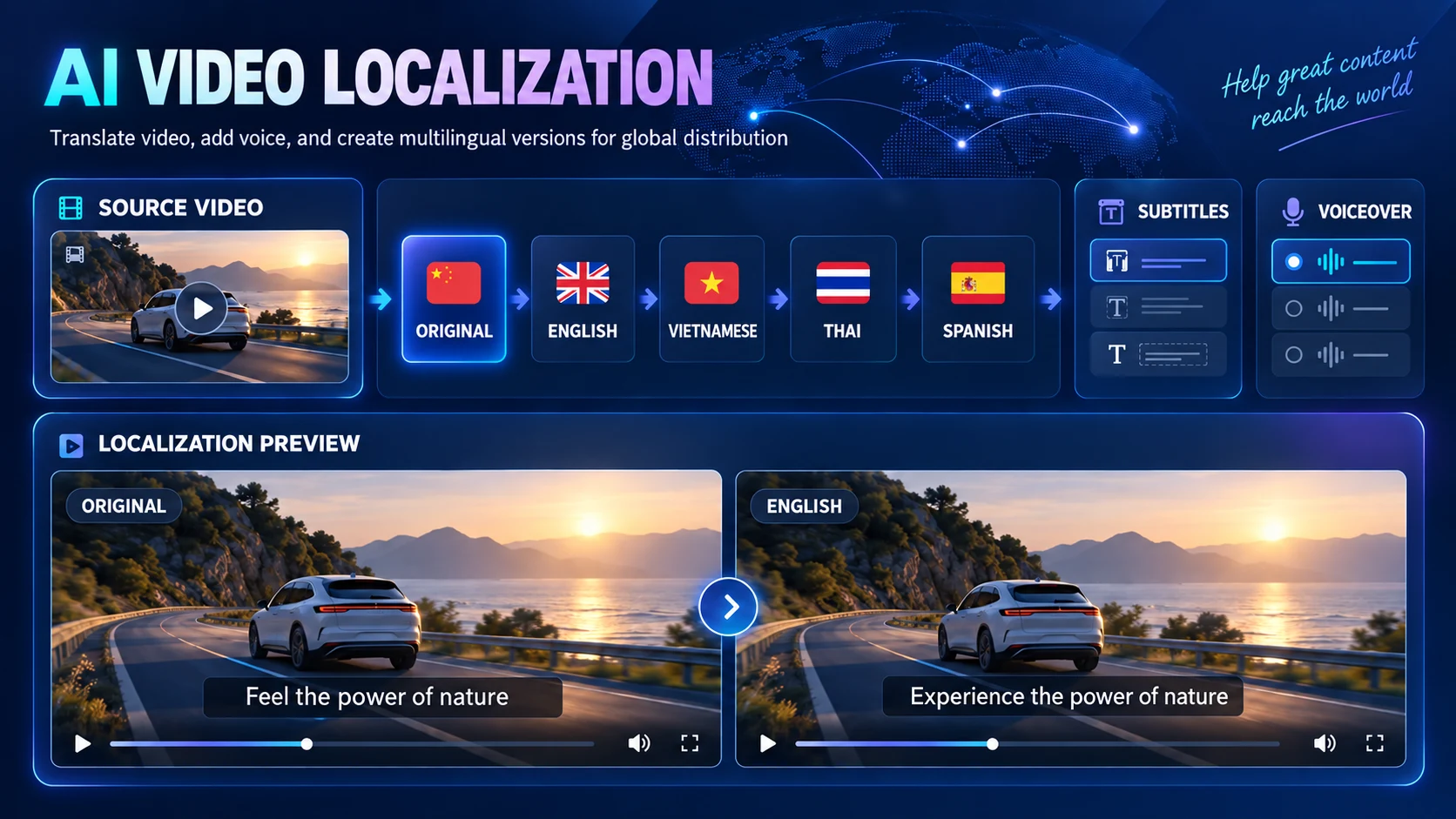
Source videos could be configured for subtitle translation, voice translation, and target voice within one task, primarily producing English, Vietnamese, Thai, and Spanish versions. Teams compared the source and localized versions to review subtitles, voice, vehicle information, and visual presentation before deciding whether the result should proceed.
How batch-task management supported collaboration
AI generation, localization, and template-production tasks displayed task type, asset quantity, progress, and current status in one place. Operations and content teams could quickly review processing, completed, and check-needed items before moving them into social publishing or existing enterprise workflows.
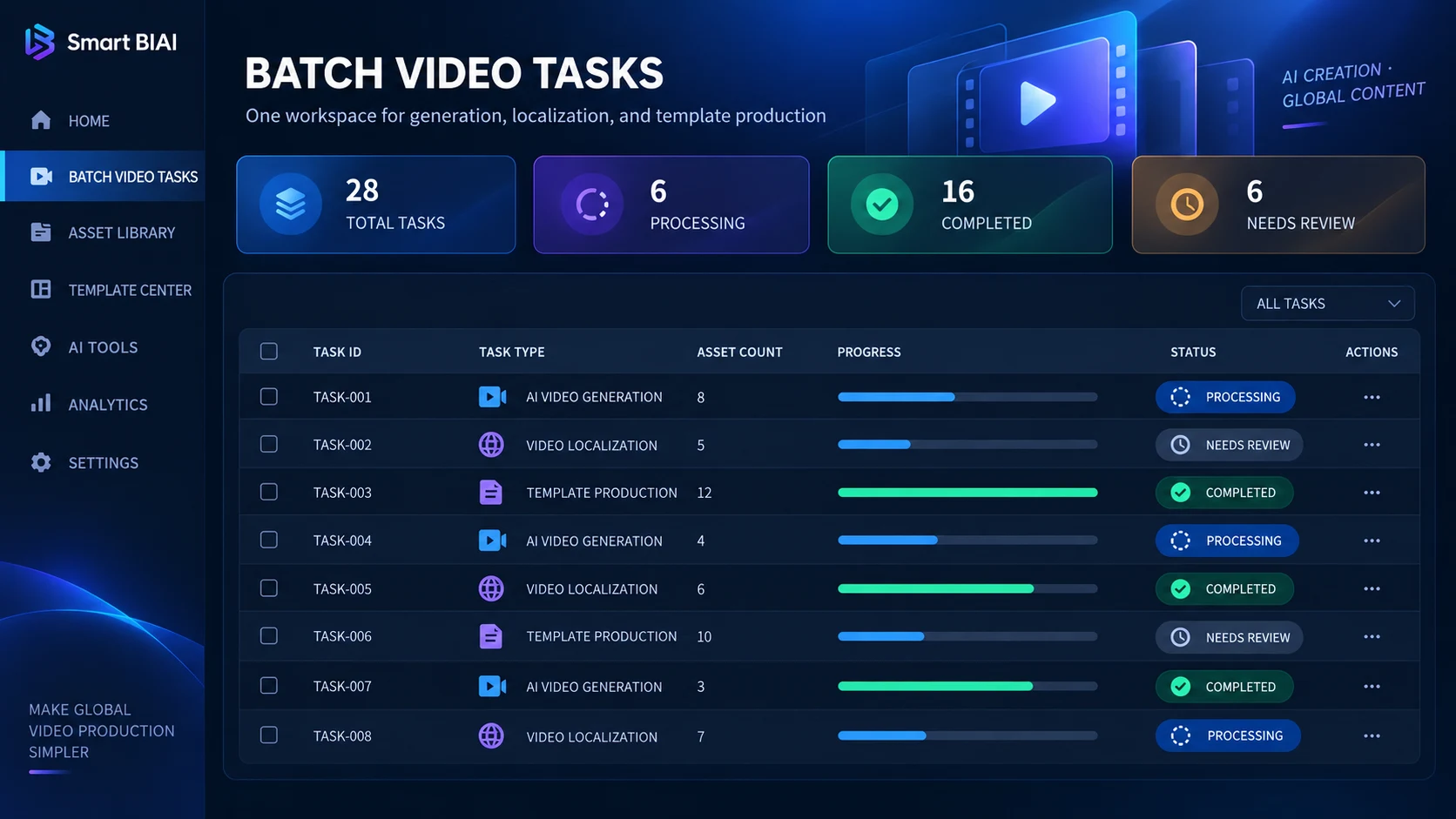
How the production workflow changed
The team produced more than 12,000 multilingual short videos per month on average, primarily in English, Vietnamese, Thai, and Spanish. Localizing one video was reduced from 4–6 hours of manual work to within 15 minutes, while source promotional asset reuse reached 75%. Actual output and production time vary with asset completeness, template maturity, language, team roles, and task settings.
How another automotive or new-energy team can start
Start with one vehicle model, one target market, and a defined asset set, then work through template generation, multilingual localization, final-video review, and batch tasks. Once brand presentation, production time, and collaboration are stable, expand to additional models, languages, markets, and social accounts.
Questions enterprise teams ask
Why is the customer not named?
The customer chose to present the story as a new-energy vehicle company, so the page does not publish its name, logo, vehicle brand, account, or personnel information.
Which language variants were produced most often?
This project primarily produced English, Vietnamese, Thai, and Spanish variants. Available languages and output quality also depend on source audio, subtitles, voice settings, and task configuration.
What does 12,000+ videos per month mean?
It is the average monthly multilingual short-video generation recorded for this project, covering template-based and localized variants. Published volume should be checked against publishing records. Output varies by assets, languages, templates and task settings across projects.
Does the within-15-minute figure apply to every video?
No. The figure comes from the single-video localization workflow in this case. Actual time varies with source duration, language, audio quality, subtitles, model, concurrency, and human review requirements.
Does 75% source-asset reuse eliminate new filming?
No. It means much of the existing promotional material was reused for localization and variant production. New models, specific scenes, and local presentation may still require additional filming or new assets.
Are the page images raw screenshots from the customer workspace?
No. These illustrations explain creative production, localization, templates and batch processing. They do not show the customer’s workspace details.
Can generated output be published immediately?
Teams should review vehicle facts, asset rights, subtitles and voice, brand presentation, and local market requirements before approved versions enter an authorized publishing workflow.
How can another automotive company begin?
Start with one vehicle model, one target market, and a defined asset set. Connect template generation, localization, human review, and batch tasks before adding more models, languages, and markets. Actual output and production time vary with assets, templates, languages, team setup, and task configuration.