
PROJECT OVERVIEW
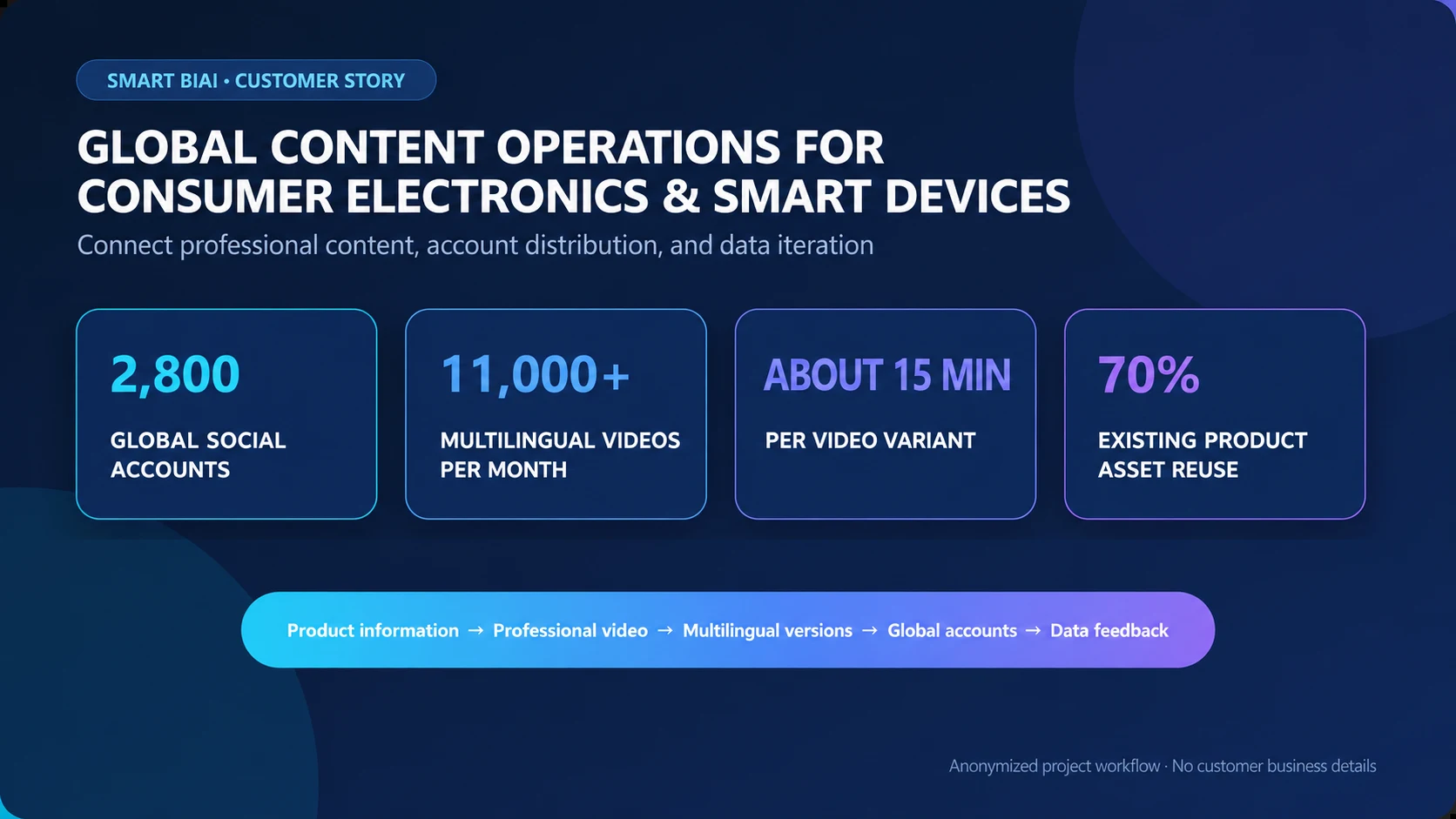
An anonymized consumer-electronics and smart-device brand used Smart BIAI to connect product assets, professional content production, 2,800 global social accounts, and operating data across Bluetooth audio, wearables, and digital accessories. Customer project records show more than 11,000 multilingual short videos produced per month, production of a single video variant reduced from about four hours to about 15 minutes, and 70% reuse of existing product assets.
Why multi-product, multi-market operations lose efficiency
The brand manages Bluetooth audio, wearables, and digital accessories while producing ongoing content for Southeast Asia, the Middle East, Europe, and North America. Each model has different specifications, demonstrations, audiences, and launch timing. As account and content volume grew, the team needed one way to connect product information, assets, language variants, account schedules, and performance feedback.
How the team organized 2,800 global social accounts
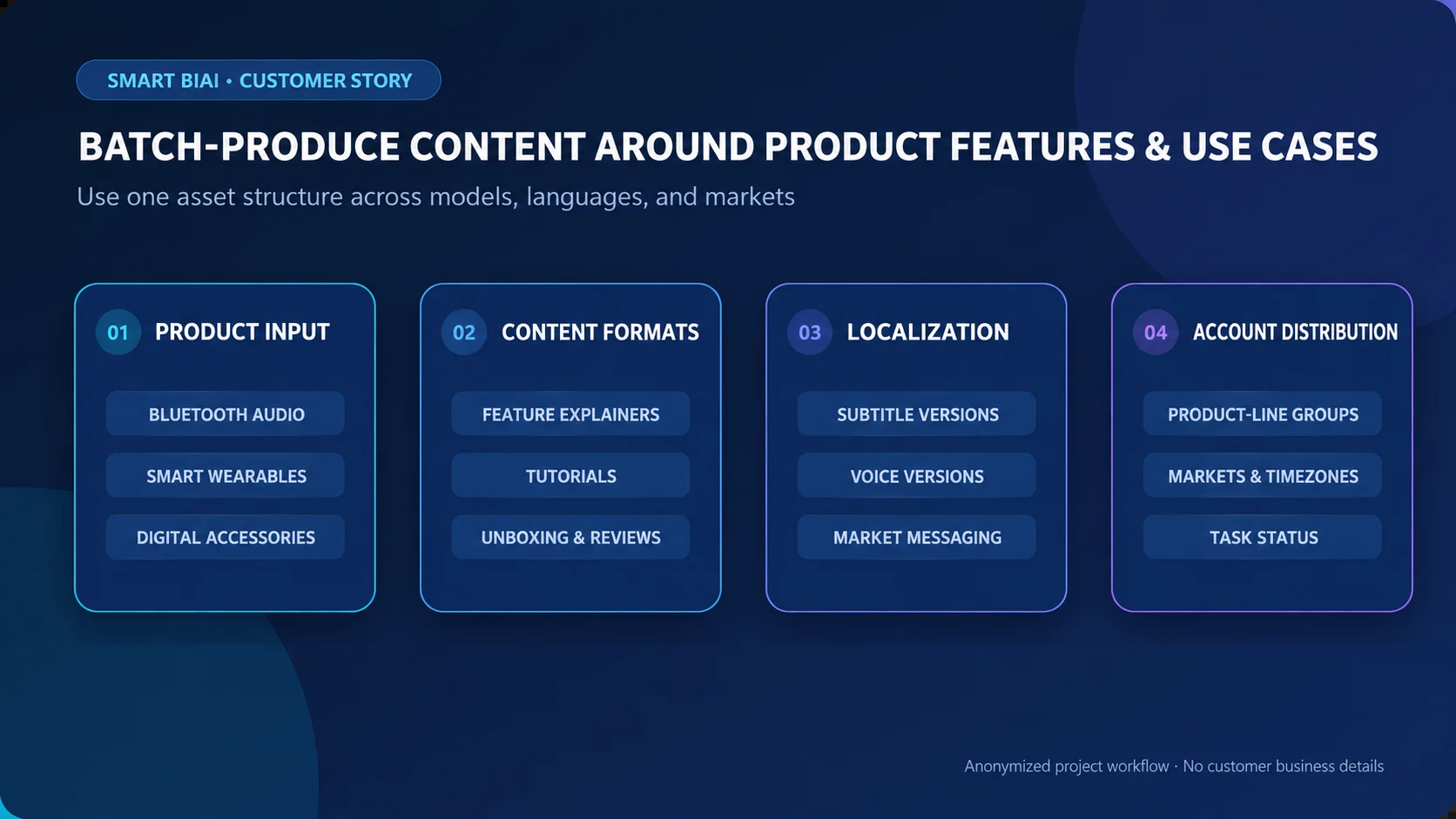
The team grouped accounts by product line, region, platform, purpose, and operating team, then assigned the relevant assets, content plans, and publishing cadence. Operators could quickly identify account scope for a launch, priority market, or content format and review schedules, execution status, and follow-up tasks in one workspace. Customer project records show 2,800 global social accounts organized in this workflow.
How professional hardware content reached 11,000+ videos per month
The team organized product footage, feature tests, specifications, and use-case assets as reusable inputs. It then produced feature explainers, tutorials, comparison tests, unboxing, and everyday-use formats with voice and subtitle variants for target markets. Customer records show more than 11,000 multilingual short videos produced per month across launch preparation and ongoing product content.
What changed from about four hours to about 15 minutes
This measurement covers assembling existing product materials and approved assets within a mature content template, processing subtitles and voice, and producing one review-ready video variant. Work that took about four hours in the previous process was reduced to about 15 minutes in this project. Product filming, information preparation, and final content approval are outside this timing.
How 70% asset reuse supported launches and ongoing operations
The team organized product imagery, footage, feature demonstrations, and confirmed specifications by model, use case, and content purpose, allowing the same asset set to support different languages, pacing, and video structures. Existing product-asset reuse reached 70% in project records, while new filming or assets were still added for new features, specific use cases, and local presentation.
How authorized data informed content decisions
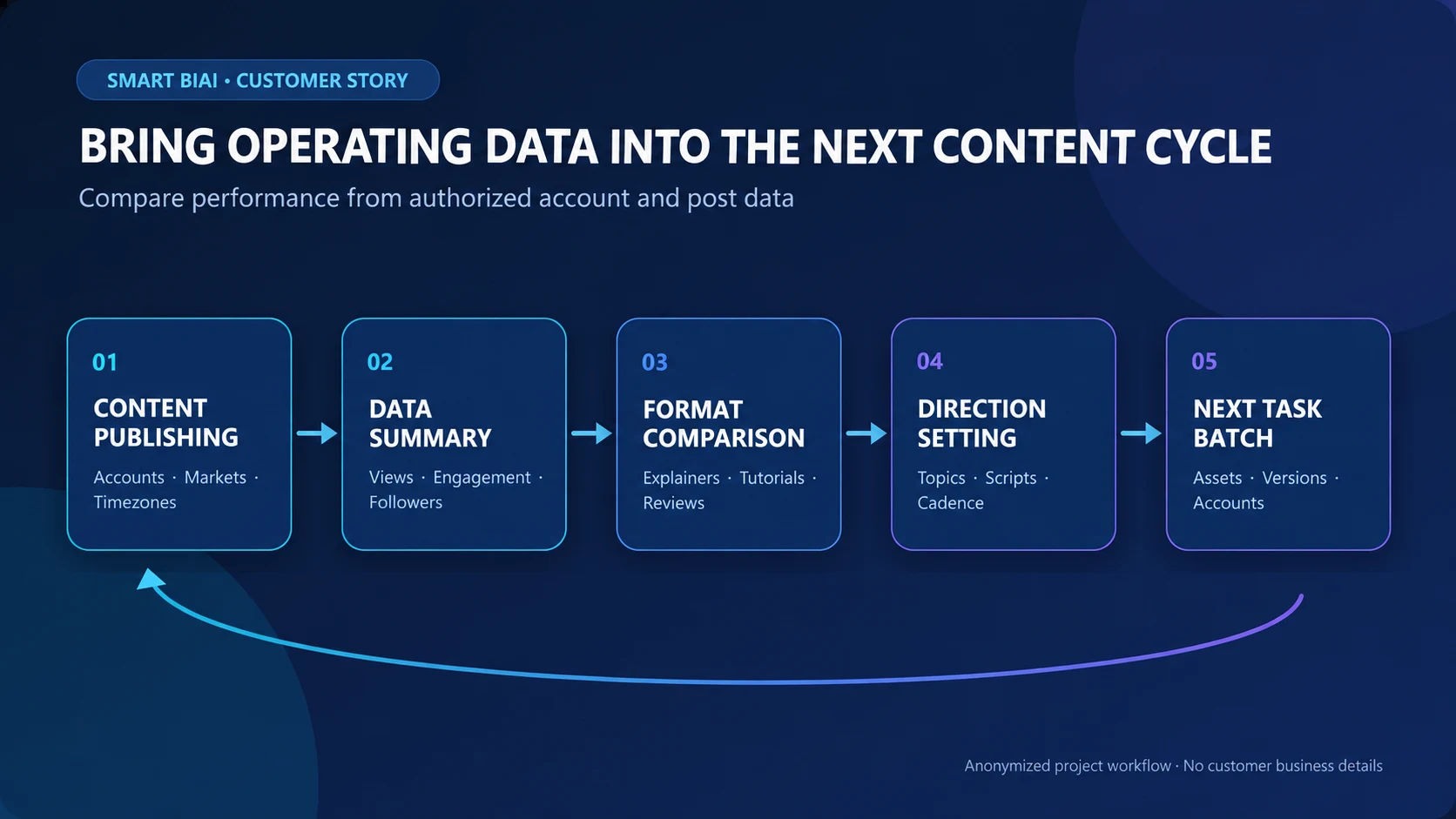
Within the authorized scope, the team compared views, engagement, and follower changes across markets, accounts, and content structures. It used differences across feature explainers, use-case content, and reviews to adjust topics, scripts, publishing windows, and the next task batch. Customer records show a 45% increase in average views across the account network during the same phase, with the share of review and use-case content classified by the team as high-performing rising from 6% to 18%, and month-over-month growth of 45% in new followers interested in digital products. Products, campaigns, account baselines, content strategy, and platform conditions also contributed to these changes.
What changed in account operations and batch distribution
With centralized grouping, scheduling, and task status, the team reduced time spent finding accounts across spreadsheets, repeatedly configuring tasks, and manually consolidating status. Under the team and task definitions used in this customer project, account-operations effort fell 52% from the previous process and batch-distribution efficiency was about three times the former level. Actual improvement varies with account baseline, team responsibilities, and task complexity.
How launches and ongoing content used the same workflow
For launches, the team planned previews, explainers, and reviews around key functions, use cases, and audiences. During ongoing operations, it adjusted content structures and publishing cadence from account and post performance. Product information, assets, templates, accounts, and data retained the same organization, reducing the need to rebuild the workflow for every launch.
How another consumer-electronics team can start
Start with one product line, one target market, and a defined account set. Organize confirmed product information and usable assets, prepare two or three frequent content structures, and complete localized publishing. Once the team can reliably find assets, review content, distribute it, and use data for the next cycle, expand to more models, languages, accounts, and markets.
Questions enterprise teams ask
Why is the customer not named?
This story is presented as an anonymized consumer-electronics and smart-device brand and does not publish the customer name, logo, product models, accounts, or personnel.
How were the 2,800 accounts organized?
The project grouped accounts by product line, region, platform, purpose, and operating team and aligned each group with the relevant assets, content plans, and publishing cadence.
What was included in the 11,000+ monthly videos?
It included multilingual feature explainers, tutorials, comparison tests, unboxing, and use-case reviews for Bluetooth audio, wearables, and digital accessories.
Does the approximately 15-minute figure include filming and final approval?
No. It covers producing one review-ready variant from existing product information, usable assets, and mature templates. It excludes filming, information preparation, and final content approval.
Does 70% asset reuse mean no new filming is needed?
No. The project reused much of its existing product imagery, footage, and feature assets, while new functions, specific use cases, and local presentation could still require additional filming.
Does data analysis automatically decide the next piece of content?
No. Smart BIAI Agent helps the team compare performance and organize recommendations from authorized account and post data. The team still confirms topics, product claims, and publishing tasks against its business plans.
Are the page images raw screenshots from the customer system?
No. The visuals were created in the website style from the case workflow to explain account organization, content production, and data iteration without customer business details.
Can another consumer-electronics brand replicate these figures?
These figures come from this customer's project records and are not fixed output or performance promises. Results vary with products, assets, markets, account baselines, team setup, operating cadence, and platform conditions.